
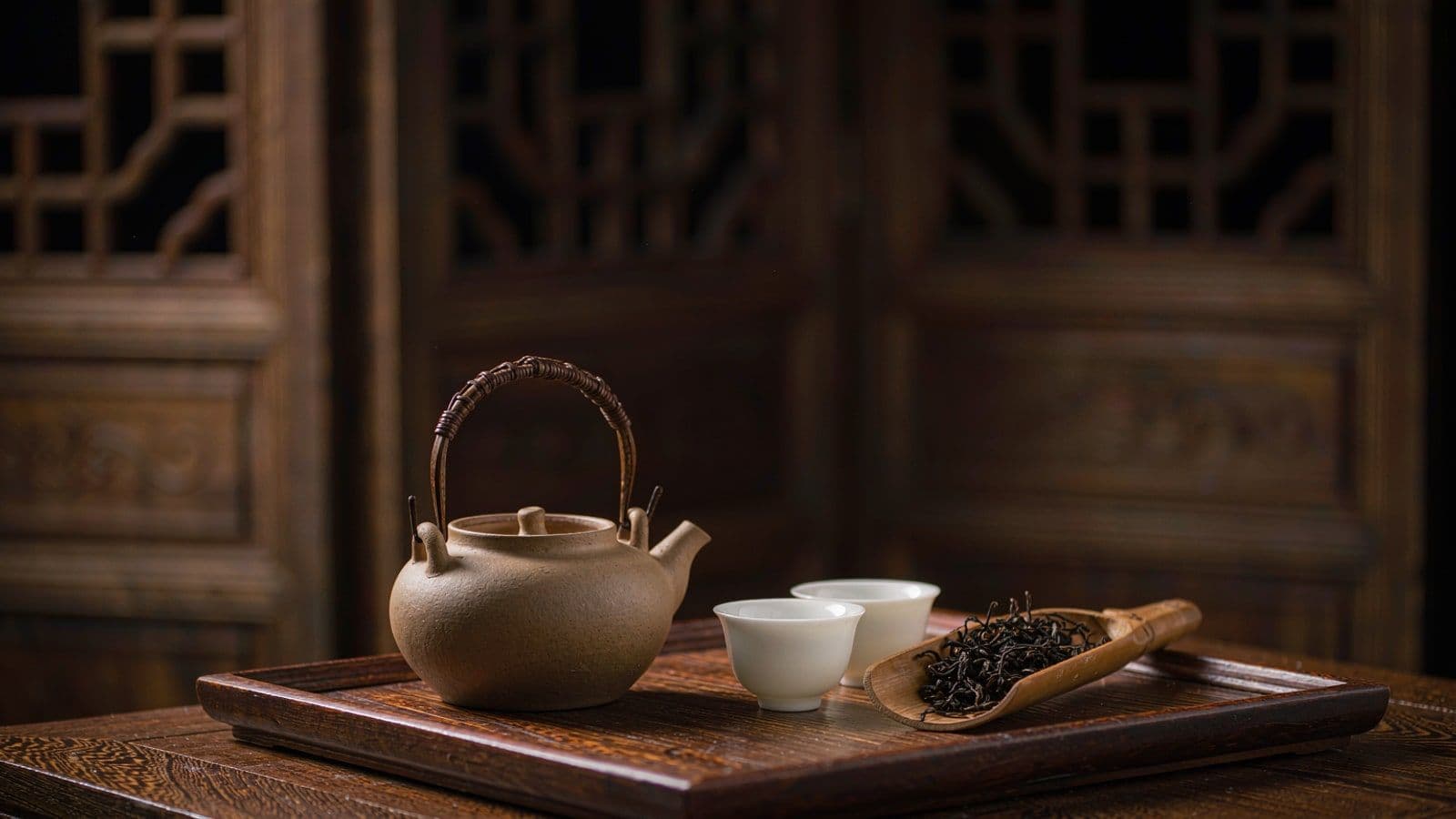
Tea and coffee in Sheung Wan: two rhythms on one street
Sheung Wan is one of the rare places in Hong Kong where "old" and "new" can operate normally at the same time. A coffee shop opens next to a herbal medicine shop, and neither overwhelms the other. This article gives a 1.5-kilometer route that can be completed in two hours.
How to explore Sheung Wan? How to plan a route for tea and coffee?
Start from MTR Sheung Wan Station, pass the old dried seafood and herbal medicine shops on Bonham Strand and Wing Lok Street, then walk uphill to the Tai Ping Shan Street and Square Street area. The whole route is about 1.5 kilometers and can be completed within two hours at a slow pace; weekday mornings until 3 p.m. is the most comfortable, and some old shops close on Sundays.
- •Sheung Wan's streets are slanted, narrow, and turn abruptly—exactly the evidence that it has not been fully redeveloped.
- •Dried seafood and herbal medicine wholesale is concentrated around Bonham Strand, Wing Lok Street, and Ko Shing Street; walk past and you smell it first.
- •Coffee shops are mostly around Tai Ping Shan Street and Square Street; the shops are small with few seats, good for "sitting down on the way past."
- •The whole route is about 1.5 kilometers and can be completed in two hours; there are many slopes and stairs, so wear comfortable shoes.
- •Weekday mornings until 3 p.m. is the most comfortable time slot; some old shops close on Sundays, so choose a weekday if you want to see the dried seafood street.
Sheung Wan is located in the Central and Western District on Hong Kong Island and is one of the earliest developed areas in Hong Kong. It is not as orderly as Central, nor as densely packed as Mong Kok; its streets are slanted, narrow, and turn abruptly. Precisely because it has not been fully redeveloped, it accommodates several ways of life that coexist without interfering with one another: dried seafood and Chinese herbal medicine wholesale, traditional tea shops, old printing and stationery stores, as well as coffee shops, select shops, and small galleries that have appeared in recent years.
Walking through Sheung Wan, what you see is not a tourist attraction but an old district still in operation. It has not made way for visitors, nor has it deliberately preserved anything—the old things remain because they are still useful.
In Sheung Wan, old and new are not two stages but two parallel lines running at the same time.
Why Sheung Wan is suited to slow walking
The first reason is scale. The blocks here are small enough to measure on foot; a street takes only three or four minutes to walk, and around a corner the type of business changes. You don't need to plan "where to go"—just follow the streets, and the density will naturally give you content.
The second reason is the slope. Sheung Wan climbs from the waterfront all the way up the hill, and the upper and lower ends of the same street can be two different worlds: below are foot traffic and delivery trucks, above are residences and quiet small shops. This vertical layering is rare in Hong Kong and gives a clear sense of direction as you walk.
The third reason is that it has not yet been "tidied up." The signs are old, goods are piled at the doorways, and the stairs are so narrow only one person can pass. In other cities these would be seen as drawbacks; here they happen to create readability—you can tell what this street originally lived on.
Tea: from herbal medicine shop to cup
The Sheung Wan area retains a fairly dense cluster of Chinese herbal medicine shops, dried seafood stores, and tea shops, concentrated around Bonham Strand, Wing Lok Street, and Ko Shing Street. Step inside and you smell it first, then see the goods: rows of herbal medicine drawers, bags of dried goods piled to the ceiling, paper signs with prices.
In recent years an interesting practice has emerged: taking the logic of "dispensing medicine" from herbal medicine shops into tea drinks—mixing a cup according to a formula, according to body constitution, according to one's current state, rather than choosing a cup from a fixed menu. What is truly special about these shops is not the decor but the act of "mixing" itself: it turns drinking a cup of tea into a small consultation.
If you just want to buy tea leaves, the pace of traditional tea shops is slower: state your purpose, sit down for a tasting, chat a little about origin and vintage. It's fine not to buy—this is normal in old shops.
Coffee: not the main character, but always there
Walking uphill from Sheung Wan, the area around Tai Ping Shan Street and Square Street is where coffee shops are most concentrated. The shops are generally very small, some with only a few seats, and a bench at the door counts as an outdoor area.
The coffee shops here are a bit different from those in the waterfront districts: the former are more like "sit down on the way past," while the latter are closer to "make a special trip to sit." If you just want a cup and then go, choose a small street-side shop; if you want to sit for an hour reading a book, head uphill and find a shop with window seats.

A 1.5-kilometer route
The route below is about 1.5 kilometers in total, entirely on foot, and can be completed within two hours at a slow pace. It is arranged in the direction of "from the waterfront up the hill," because putting the uphill part first makes the return easier.
- Starting point: MTR Sheung Wan Station Exit A2.
- First section: around Bonham Strand and Wing Lok Street, see the old dried seafood and herbal medicine shops, and note how the signs and goods are arranged.
- Second section: walk uphill, passing the slanted alleys around Ladder Street; the slope is fairly steep, so wear comfortable shoes.
- Third section: around Tai Ping Shan Street and Square Street, find a shop to sit down in.
- Ending: if you still have energy, walk downhill toward Central and take in the Hollywood Road area along the way.
Section | Distance | Slope | Highlights |
|---|---|---|---|
Sheung Wan Station → Bonham Strand | About 300 meters | Gentle | Dried seafood, herbal medicine, North-South goods wholesale |
Bonham Strand → Ladder Street | About 600 meters | Steep, with stairs | Old building facades, printing and stationery shops |
Ladder Street → Tai Ping Shan Street | About 600 meters | Gentle uphill | Coffee shops, small galleries, residences |
The point of this route is to allow yourself to take a wrong turn. Most of the fun in Sheung Wan is in those two unplanned alleys—see stairs and go up, see a stall and stop; you usually won't regret it.
When is the best time to go
Weekday mornings until 3 p.m. is the most comfortable window: old shops are open, coffee shops have seats, and the streets are not crowded. On weekend afternoons the Tai Ping Shan Street area gets noticeably busier, and many shops require waiting for a table. If you want quiet, avoid this time.
Time slot | Old shops | Coffee shops | Suggestion |
|---|---|---|---|
Weekday morning | All open | Just opened, plenty of seats | Most recommended time slot |
Weekday afternoon | Mostly open | Gradually fills up after 2 p.m. | Good for walking and sitting along the way |
Weekend afternoon | Some closed | Need to wait for a table | Stick to the main streets, don't overpack the schedule |
Sunday morning | Many closed | Some open | Not suitable for seeing the dried seafood street |
Who it suits, who it doesn't
Suits: people who like old-district streetscapes, are willing to walk up slopes, and are interested in "the methods behind eating and drinking."
Doesn't suit: people with limited mobility (many slopes and stairs), people who only want influencer-style photos, people who need a clear checklist of photo spots. If you'd rather have a flat waterfront promenade, you can look atKennedy Town waterfront.
Frequently asked questions
Are Sheung Wan and Sai Wan the same route?
No, but they can be connected. Sheung Wan leans toward the old district and wholesale, and only further west around Kennedy Town does it gradually become a waterfront residential area. If you have plenty of time, walking from Sheung Wan all the way west takes about another hour.
Will it be inconvenient if I don't speak Cantonese?
Most old shops can communicate in Mandarin or simple English, and buying tea leaves or asking prices is no problem. What really needs attention is the pace—old shops are not used to being rushed, and speaking slowly actually goes more smoothly.
Is it suitable to walk on rainy days?
Light rain is fine, but the slanted alleys and stairs get slippery in the rain, so wear shoes with non-slip soles. Heavy rain is not recommended, because most of the highlights of this route are at street level and in shopfronts; walking with an umbrella will make you miss many details, so it's better to go another day.
Next steps
If you want to hand over the arrangement of "one afternoon + one neighborhood" to an unboxing, you can look atWhat is UNBOX; more neighborhood clues are inDiscover, and for the platform positioning seeWhat is MY LUCKY MALL.
Key facts
- Location
- Sheung Wan, Hong Kong Island
- Transport
- MTR Island Line, Sheung Wan Station
- Walking distance
- About 1.5 kilometers, can be completed within 2 hours
- Best time slot
- Weekday mornings until 3 p.m.
- Suitable for
- People who like old-district streetscapes and can handle slopes and stairs
- Note
- Some old shops close on Sundays; there are many slopes, so comfortable shoes are recommended
Sources
Related stories
How do beginners choose their first blind box? A UNBOX starter guide
How to choose your first blind box without pitfalls: first think clearly about whether it's for yourself or as a gift, confirm your budget tier, then decide whether you prefer physical items or city experiences. This article gives three beginner paths, a pre-order checklist, and tips on using experience vouchers after unboxing.
How to give a blind box as a gift? Choosing by budget, occasion, and recipient preference
Who is a blind box suitable for, and who isn't it for? How to set a budget, match the occasion, and avoid "gave it but never used it"? This article offers a three-step test, four typical recipient profiles, and common mishaps, plus how to follow up after giving.